Store.
Designed by heypcb
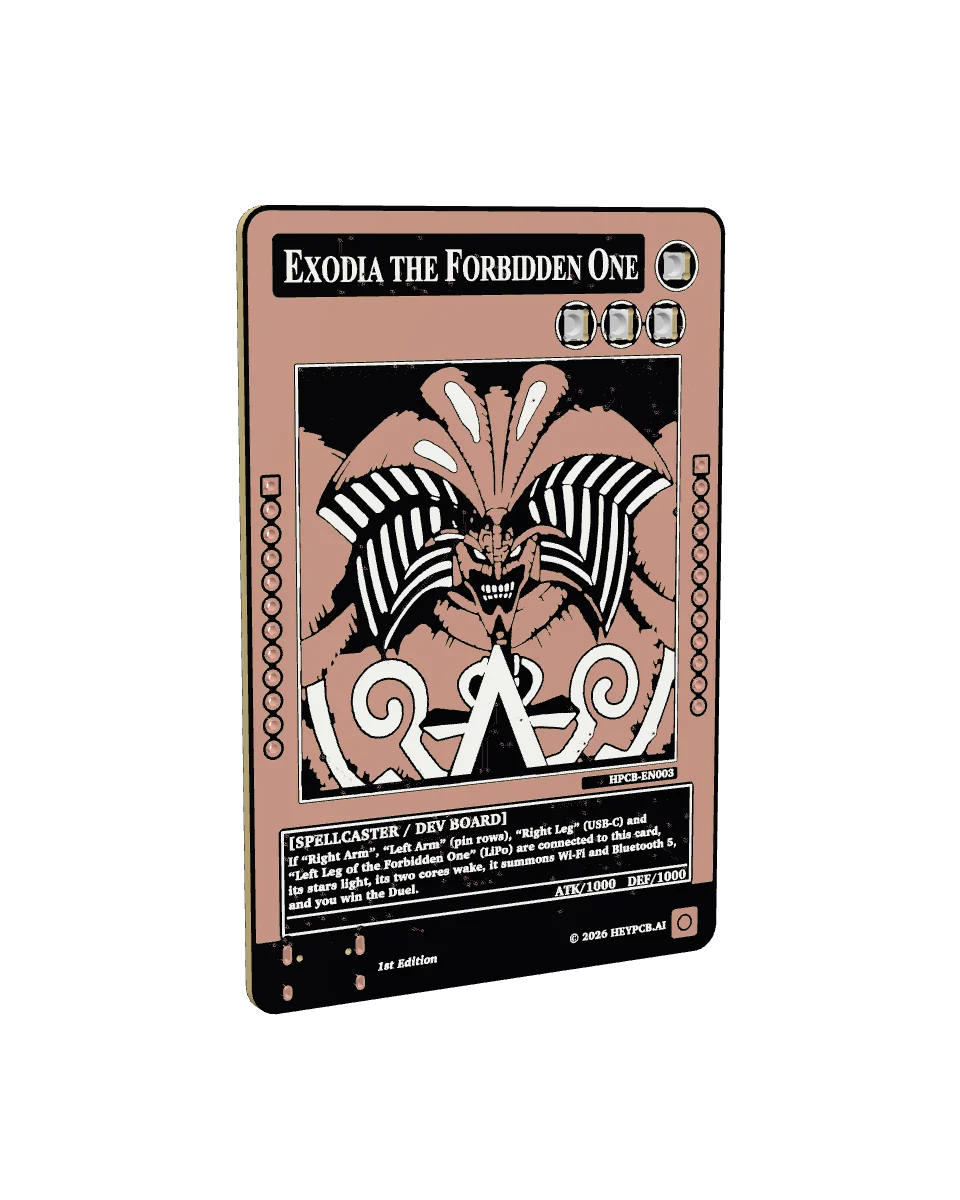
1st Edition · HPCB-EN003
Exodia the Forbidden One
An ESP32-S3 dev board the size of a trading card.
Open source
Free
Every file it was made from, free to build your own. Open the design in the editor and download them there.
Open-source designThe hardware under CC BY-SA 4.0, the firmware under MIT. Exodia's art and name are Konami's, and neither licence covers them.
Free with HeyPCB Max
Until Nov 30, 2026
Get HeyPCB Max and we'll ship you an Exodia board, free. You add your address once you've subscribed. Exodia ships to U.S. addresses only.
$200/month · renews monthly until you cancel
Built your own? Donate to the next board.
Both sides.
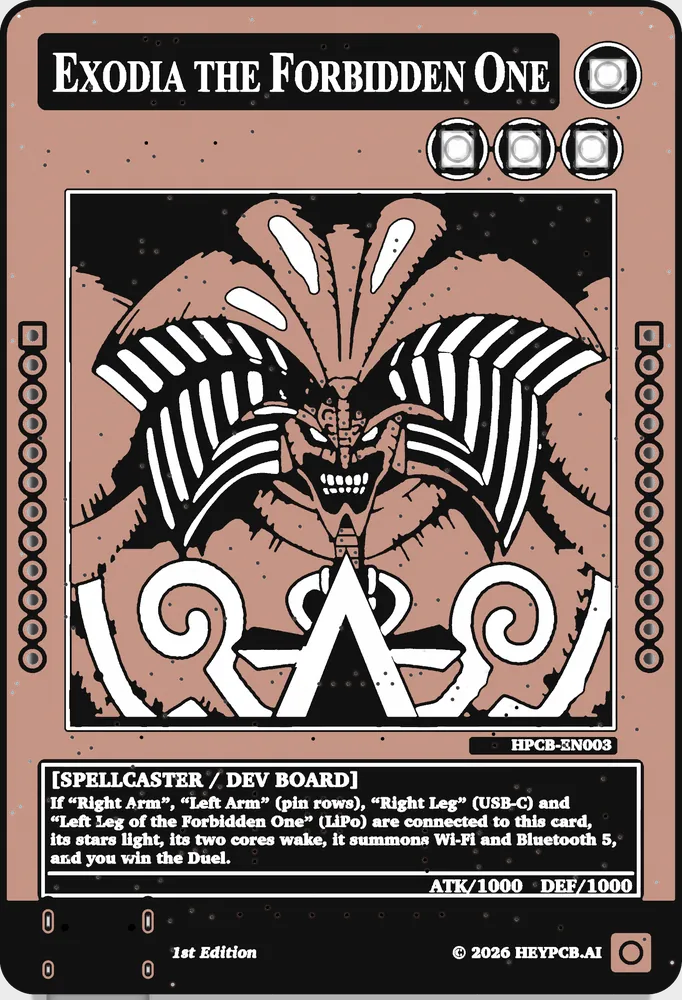
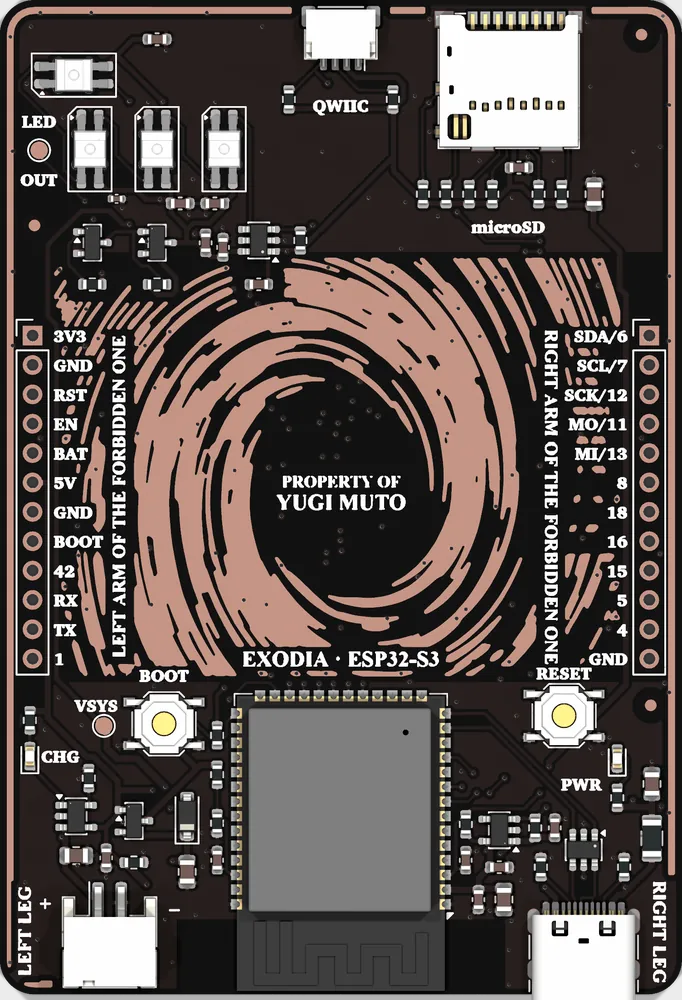
Exodia the Forbidden One has a third of the ATK of a Blue-Eyes White Dragon, and in the very first episode it beat three of them without leaving Yugi's hand.
Part by part.
- 01ESP32-S3Two cores, Wi-Fi, Bluetooth 5
- 02USB-CPower and code
- 03Battery1S LiPo, JST-PH
- 04ChargerCharges the battery
- 053.3 V regulator1 A, 8 µA idle
- 064 RGB LEDsShine through the face
- 07LED OUTChain more LEDs
- 08QwiicSensors, no soldering
- 09microSDFiles and logs
- 10BOOTFlash mode, then a button
- 11RESETRestarts the chip
- 1212 pinsPower, UART, GPIO
- 1312 pinsI²C, SPI, GPIO
What's on it.
Read off the board's own design files.
- Module
- ESP32-S3-WROOM-1-N8R8, two cores at 240 MHz, 8 MB flash, 8 MB PSRAM
- Radios
- Wi-Fi 4 (2.4 GHz), Bluetooth 5 LE
- Power
- USB-C, 5 V, fused
- Battery
- 1S LiPo on JST-PH, charged at 213 mA
- Storage
- microSD
- I²C
- STEMMA QT / Qwiic
- Lights
- Four SK6812 addressable LEDs, behind the face
- Buttons
- RESET and BOOT
- Pins
- 24 holes at 2.54 mm, headers not included
- Board
- 59 × 86 mm, a trading card's size, four layers, OSP